IVF and The IVF Process

IVF is a fertility treatment where an egg and sperm are combined outside the body in a laboratory, allowing the fertilised embryo to develop before being transferred to the uterus to increase the likelihood of pregnancy.

Depending on your treatment plan, your fertility specialist may recommend that you start medication or injections before the first day of your cycle. Rest assured - we’ll let you know the plan well in advance.
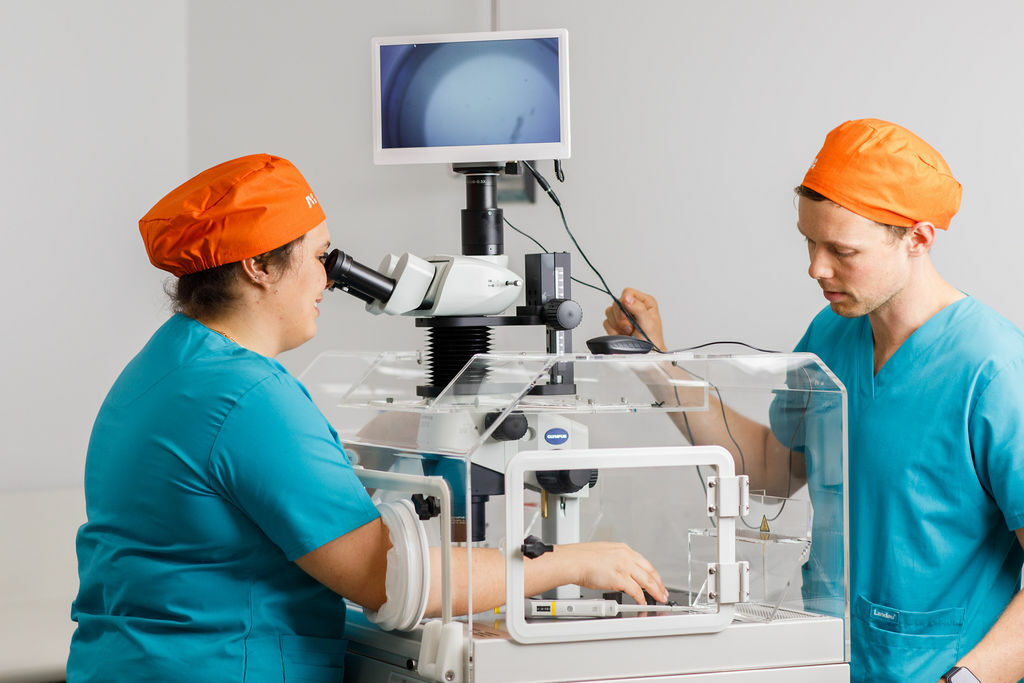
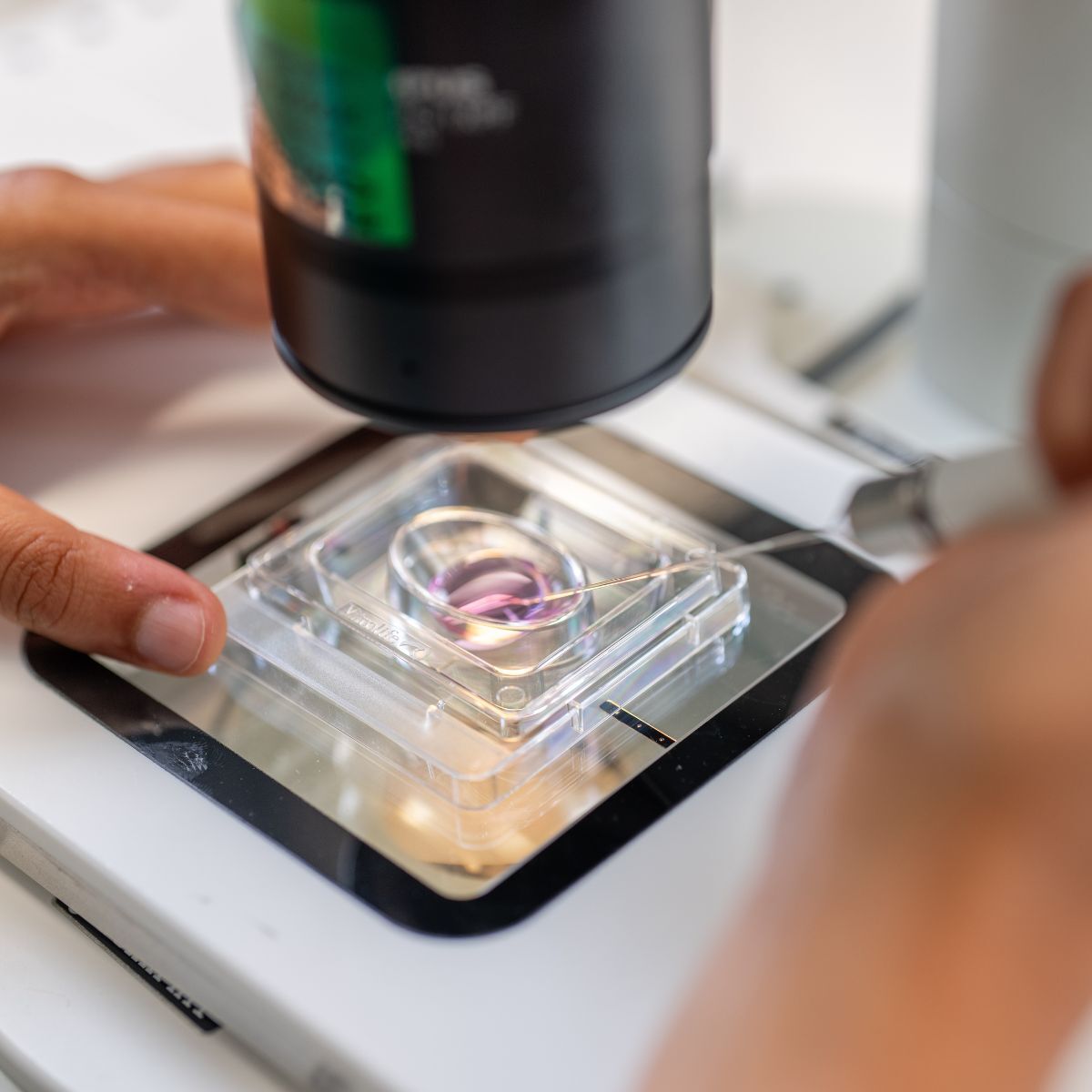
Embryologist combining sperm and egg in the IVF process

What is IVF?

In vitro fertilisation (IVF) is a treatment option used when conception is difficult due to factors such as low sperm quality, blocked fallopian tubes, ovulation issues, endometriosis, age-related fertility decline, or unexplained infertility. IVF is a fertility treatment where an egg and sperm are combined outside the body in a laboratory, allowing the fertilised embryo to develop before being transferred to the uterus to increase the likelihood of pregnancy. IVF works by supporting several steps of the natural reproductive process, including egg development, sperm preparation, and embryo growth.

An introduction to IVF

Simply put, the IVF process takes eggs and sperm and combines them in a culture dish in a lab. If the natural process occurs and they fertilise, an embryo will form. We take the tiny embryo (0.2 mm) and insert it into the uterus. If it grows and develops, you’ll take your baby home nine months later.

So, how do we get there?

  • We stimulate your ovaries to help your body produce eggs it has created naturally. This involves a series of injections or medications. They’re easy to manage; our friendly nurses will walk you through the process and we have additional resources to guide you at home.
  • We remove those eggs in a simple day procedure called the egg collection or egg retrieval with our experienced Monash IVF Clinicians.
  • Your partner provides our laboratory with a sample of sperm, or we prepare the donor sample in the laboratory. The laboratory will prepare the samples to collect the most viable sperm from the sample for combining with your eggs.
  • Our expert scientists combine and culture the eggs and sperm in our lab. Our goal is to create as many embryos as possible—the more embryos you have, the greater the chance of some being viable for use
  • If the eggs fertilise, they become embryos and we’ll grow them for five days to the blastocyst stage. At this point, you’ll come back in to have the embryo/s transferred into your uterus.
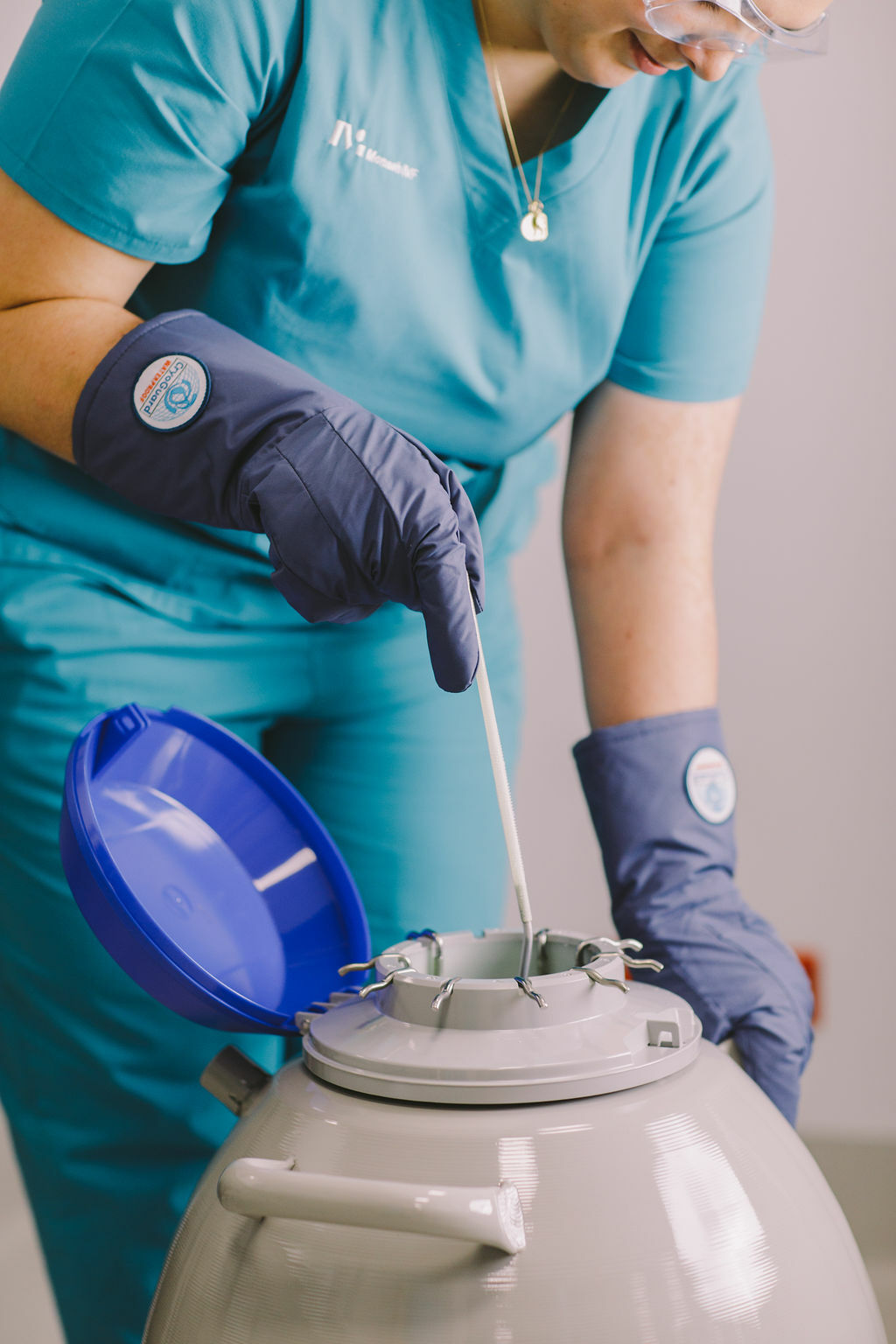
  • If you have additional embryos considered to be viable, we will freeze them for you to use in another cycle if needed.
  • You’ll have a two-week wait while we see if the embryo ‘takes’. It’s best to keep busy during this time if you can. Our counsellors are here for you if you need to talk.
  • At this time we will get you to do a blood test to see if you’re pregnant.

Please remember, our approachable team are here for you throughout your treatment. They make sure you understand each step of the process, and that you have the information and support you need.

Did you know that the hormones in the most common IVF medications are produced naturally in the body? The eggs we’re stimulating already exist - the medication simply boosts the natural levels of these hormones to encourage more eggs to develop.

Single woman with toddler low res 80

The IVF Process Step-by-Step

Step 1 — Day 1 of Your Period: Starting Your Cycle

Your IVF cycle typically begins on Day 1 of your period. Contact your clinic so we can confirm your treatment plan and schedule medication, monitoring visits, and key dates.

In short: Notify your clinic, confirm your start date, and prepare for stimulation medications.

Hetero couple with baby low res 144

The IVF Process Step-by-Step

Step 2 — Ovarian Stimulation (10–14 Days)

During ovarian stimulation, medication encourages your ovaries to develop multiple follicles, each containing a potential egg. In a natural cycle, only one egg usually matures. IVF aims to safely grow several eggs to give you the best chance of creating healthy embryos.

You’ll self-administer daily injections, usually into the lower abdomen using very fine needles. Most people find these injections manageable after the first day or two. Your nurse will teach you exactly how to prepare and give the medication.

What happens during stimulation

  • Daily hormone injections stimulate the ovaries.
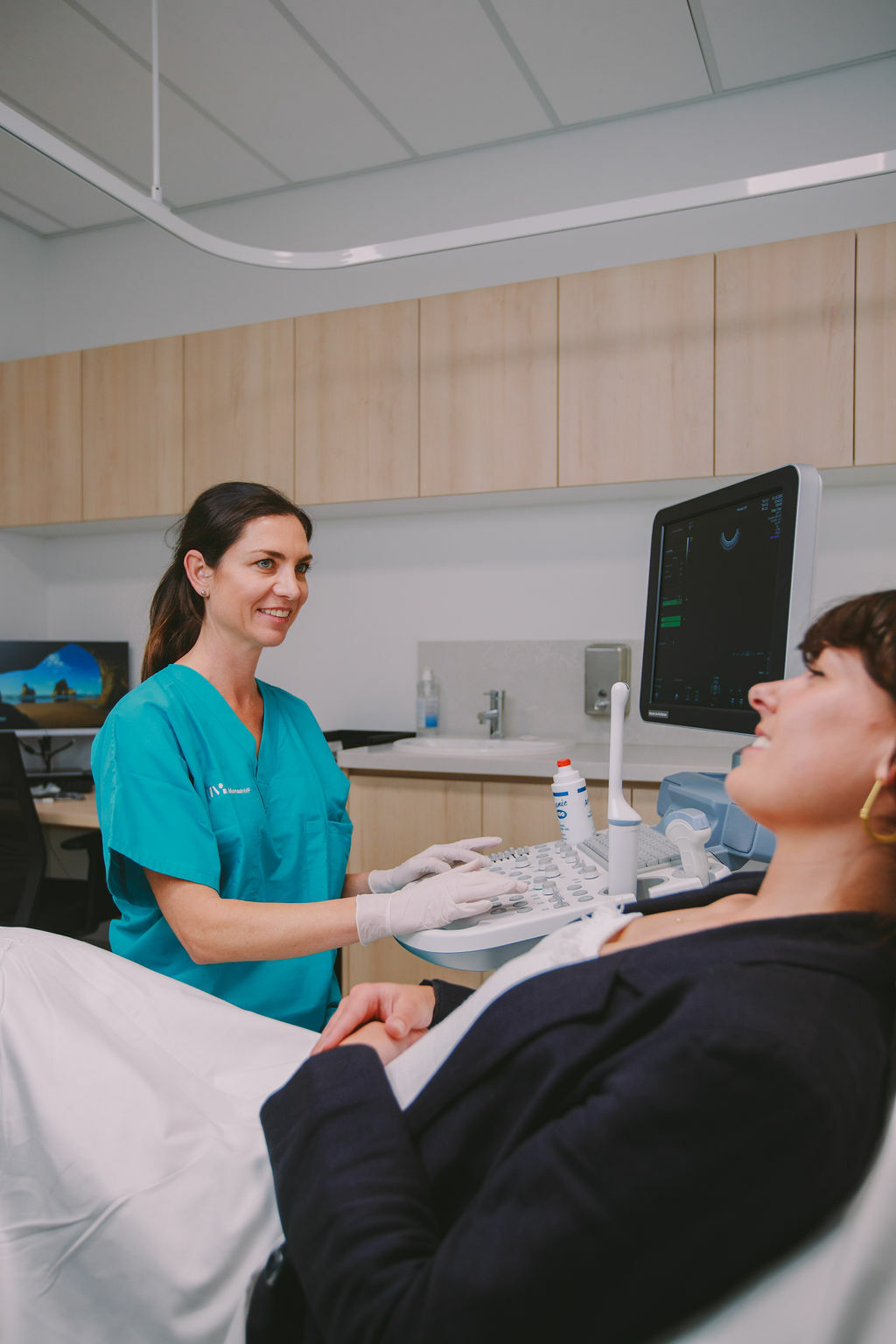
  • Tracking appointments in the second week, every 2–3 days, involve blood tests and vaginal ultrasounds to check hormone levels and follicle growth.
  • Based on your results, your doctor may adjust your medication dose to ensure follicles are growing at a safe and steady rate.
  • When your follicles reach the right size, you’ll take a trigger injection to prepare the eggs for collection.

How you might feel: You may experience mild physical and emotional changes such as bloating, cramping, breast tenderness, mood shifts, headaches, or fatigue due to rising hormone levels during stimulation.

Your care team will closely monitor your blood tests and scans to ensure follicles are growing at the right pace, hormone levels remain safe, reduce overstimulation risk, and choose the ideal day for egg collection. This real-time monitoring is what allows IVF treatment to be personalised to your body’s response.

Egg collection

The IVF Process Step-by-Step

Step 3 — Egg Retrieval (Egg Collection)

Egg retrieval, also called an egg pick up (EPU), is a simple hospital day procedure where your fertility specialist collects the mature eggs from your ovaries. Using high-resolution ultrasound guidance, your specialist gently passes a fine needle into each ovary to draw out the fluid from the follicles.

Eggs are microscopic, so they can’t be seen directly; instead, they are collected from the follicular fluid and then identified in the lab by your embryology team. Only follicles that have grown to the right size are targeted, as these are most likely to contain mature eggs. On average, 8–15 eggs are collected, though this varies depending on age, ovarian reserve, and clinical background.

This is a day procedure performed under light general anaesthetic using ultrasound guidance.

What to expect:

  • The procedure takes 20–30 minutes. After the procedure, you’ll rest in recovery while the anaesthetic wears off.
  • Most people go home within a few hours. You’ll need a support person to take you home, as you won’t be able to drive for the rest of the day.
  • Mild bloating or cramping for 24–48 hours is normal.
Monash10073

The IVF Process Step-by-Step

Step 4 — The Sperm

If you’re using fresh sperm, a sample is usually produced on the morning of your egg retrieval. If you’re using frozen or donor sperm, our embryologist will have the sample thawed, prepared, and ready in the lab. You can review our sperm donors here.

To understand sperm quality, we use a semen analysis to isolate the most viable sperm, which measures key factors such as:

  • Motility – how well sperm move
  • Count – the number of sperm present
  • Vitality – how many are alive and functioning

After preparation, the healthiest sperm are ready for the next step in the IVF process. The prepared sperm are then combined with the eggs collected during your egg pick up.

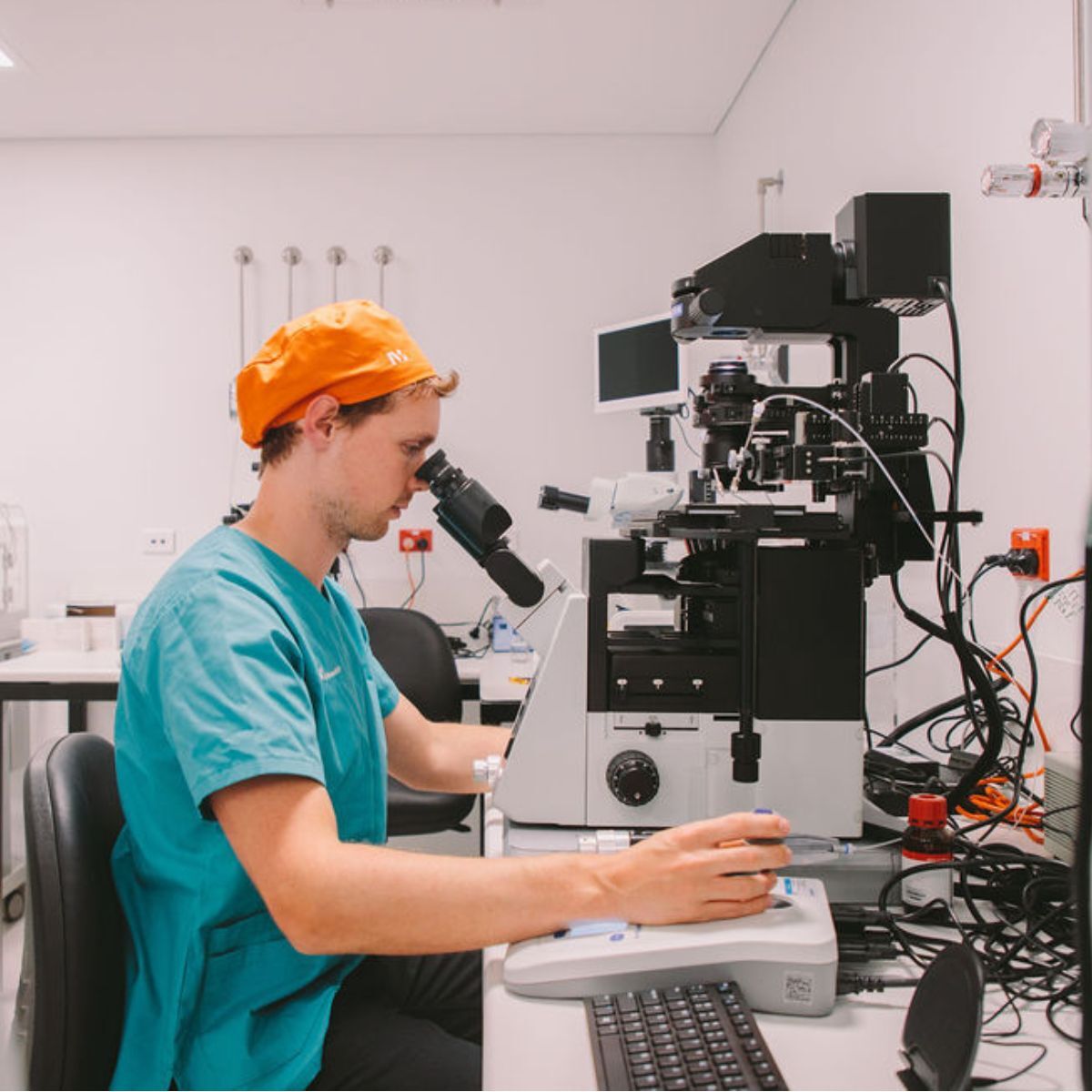
Lab needle microscope

The IVF Process Step-by-Step

Step 5 — Fertilisation

After retrieving the eggs from your ovaries, there are two ways fertilisation may occur:

  • Standard IVF: sperm and eggs are placed together in a culture dish
  • ICSI: a single healthy sperm is directly injected into each egg (recommended for certain conditions)

After the insemination procedure, we place the inseminated egg(s) into our specialised culture incubators to assess for fertilisation approximately 17 hours later, the next day. We are looking for signs of normal fertilisation - 2 pronuclear bodies known as ‘pronuclei’. One from the egg and one from the sperm. If the egg does not present with 2 pronuclei, then the egg has not been fertilised and will not produce an embryo

Monash10115

The IVF Process Step-by-Step

Step 6 — Embryo Development

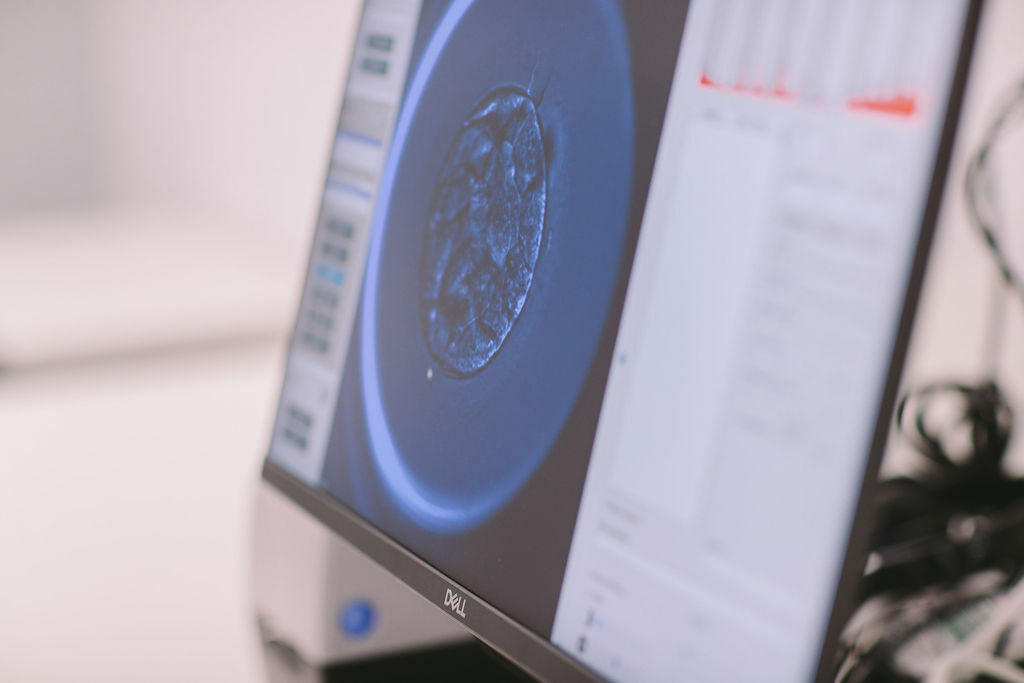
Ideally, after combining a sperm with the egg, approximately 17 hours later it will fertilise and begin forming an embryo. Our scientists will culture the developing embryo(s) in a special incubator, where the conditions for growth and development are optimised to grow the best possible embryos.

Creating the ideal environment for growth

We create these perfect growing conditions using a special mix of amino acids, and nutrients similar to the ones your own body would use to nurture the embryo. Our goal is to mimic the body’s natural processes as closely as possible.

How embryos are expected to grow

Our scientists keep a close eye on the embryo’s development over the next 5-6 days. They’re aiming to see:

a two to four-cell embryo on day two

a six to eight-cell embryo on day three (called the cleavage stage)

an embryo of roughly 100 cells by day 5 or 6 (called the blastocyst stage)

Our goal is to grow all embryos to the blastocyst stage. We know that transferring more robust and developed embryos into the uterus boosts your chances of a successful pregnancy.

Not all embryos will progress—and that’s normal

Unfortunately, not all eggs will fertilise or reach each embryo stage. The eggs might not be mature, or the sperm mightn’t be strong enough, or the resulting embryo may not be normal.

We know you’ll be eager for news along the way. Rest assured, we’ll keep you up-to-date on how your embryos are developing. In the meantime, if you have any questions, our friendly team are just a phone call away.

Monash10169

The IVF Process Step-by-Step

Step 7 — Embryo Transfer

Once a healthy embryo has developed in the lab, the next step is to gently transfer it into your uterus. This is a quick, straightforward procedure known as an embryo transfer.

Preparing for your transfer

Your fertility nurse will contact you beforehand with simple instructions, usually related to timing, bladder comfort, and general preparation. There’s nothing complicated to do, and most people find this step far easier than they expect.

What happens during the procedure

An embryo transfer is very similar to a pap smear. You’ll lie comfortably on the procedure bed while a scientist prepares the embryo in the laboratory, placing it into a very fine, flexible tube called a catheter. This step requires exceptional skill to ensure the embryo is handled as gently as possible.

Your fertility specialist then guides the catheter through your cervix and releases the embryo into the uterus. The whole process usually takes around five minutes.

After the transfer

And that’s it. Your embryo is now safely inside your uterus. There’s:

  • No anaesthetic
  • No recovery time needed
  • No restrictions on movement

You can get up straight away and continue with your day. The embryo will not “fall out” if you stand, walk, or go to the toilet; it is well-protected within the uterus.

Patients who find vaginal examinations very uncomfortable can discuss with their specialist to have the embryo transfer under a general anaesthetic.

Lab microscope

The IVF Process Step-by-Step

Step 8 — Pregnancy Blood Test

Approximately two weeks (10-14 days) after your embryo transfer, you’ll have a blood test to measure your levels of the hormone hCG (human chorionic gonadotropin). The level of hCG in your bloodstream is used to indicate pregnancy. Your nurse will let you know exactly when to have your blood test, as it may vary for some patients.

We understand that the lead-up to this final blood test can be an anxious time. That’s why it’s a good idea to distract yourself if possible. You may even like to plan a fun event around the time you’re expecting your result. A weekend away or a special lunch can ease stress and give you something to look forward to.

At Monash IVF, your trust and safety is our priority - every step of your treatment process is guided by the highest standards of care. If you would like to learn more about our stringent safety processes, please view our laboratory protocols for more information.
3

How Long Does an IVF Cycle Take?

A full IVF cycle typically takes 4-6 weeks, including stimulation, egg collection, embryo development, and pregnancy testing. Your timeline may vary depending on your treatment plan, underlying conditions, and how your ovaries respond.

Ivf side effects

What Are the Side Effects of IVF?

Most side effects are mild, temporary and could include:

  • Bloating
  • Cramping
  • Mood changes
  • Mild breast tenderness
  • Injection site discomfort

A rare but serious complication is Ovarian Hyperstimulation Syndrome (OHSS). Your clinical team will monitor you closely to reduce risk.

Will I need IVF?

That depends. Your fertility specialist will get to know your medical history and individual circumstances. Some common reasons why they may recommend IVF include if you have:

  • Blocked or damaged fallopian tubes/tubal factor/tubal ligation
  • Endometriosis and/or adenomyosis
  • Low sperm count or motility
  • Irregular ovulation
  • Advanced maternal age, making it less likely to conceive naturally
  • Recurring miscarriage
  • Infertility relating to sperm quality or quantity
  • Uterine fibroids that impact on the uterine cavity
  • Polycystic ovarian syndrome (PCOS)
  • Potential genetic issues where embryo screening may help

Before IVF, many people try tracking cycles, ovulation induction, or IUI, depending on what’s most appropriate.

Our approachable team are here for you throughout your treatment. They make sure you understand each step of the process, and that you have the information and support you need.

Explore fertility treatment options.

At Monash IVF, it’s common practice to transfer one embryo at a time. We freeze remaining embryos using our advanced technology. These can be used in future treatment.

Want to know more about IVF?

Our expert fertility nurses can answer any questions you may have and offer guidance on next steps. You can book a free 15-minute nurse chat here.

Book a free nurse chat

IVF Success Rates

At Monash IVF, we’re incredibly proud of our IVF pregnancy success rates. We hope our demonstrated success in fertility might lead you to choose us as your trusted fertility provider.

Success depends on several factors, including:

  • Your age
  • Egg and sperm quality
  • Underlying fertility conditions
  • Previous treatment history
  • Embryo quality and genetic factors

At Monash IVF, our continuous improvement plans and the evolution of our scientific protocols has led us to observing incremental improvements every year in clinical pregnancy rates across the Monash IVF Group clinics.

Learn about IVF success rates

How much does IVF cost?

Costs vary depending on treatment type, medications, and any additional procedures (e.g., ICSI, PGT). Learn more about Monash IVF costs below.

Learn about IVF treatment costs

Frequently Asked Questions about IVF

Monash SH2000334

Keen to get started?

Book a consult with one of our expert fertility specialists. They’ll tailor a treatment plan specifically for you.

Book an appointment

Is it time for a second opinion?

If you’ve recently met with another clinic or provider and you’re not entirely comfortable with the advice you’ve been given, or you simply didn’t ‘click’ with your specialist, it’s completely okay to seek a second opinion.

At Monash IVF, we believe that feeling heard, informed and supported is just as important as the treatment itself. A second opinion can give you clarity, confidence and peace of mind about your next steps.

Our team of experienced fertility specialists take the time to understand your personal circumstances and explore every option available to you. Whether you’re just starting out or you’ve already begun your fertility journey elsewhere, we’ll ensure you receive clear guidance, compassionate care and evidence-based recommendations tailored to your needs.

Because when it comes to your fertility, you deserve to feel completely confident in your care.

Learn more
Footer Aqua

Start your fertility journey

Wherever you are on your journey, one of our supportive nurse enquiry team members can help you understand your options and take the next step. These conversations are free and informative.

Book a nurse chat Book an appointment