Ultrasound
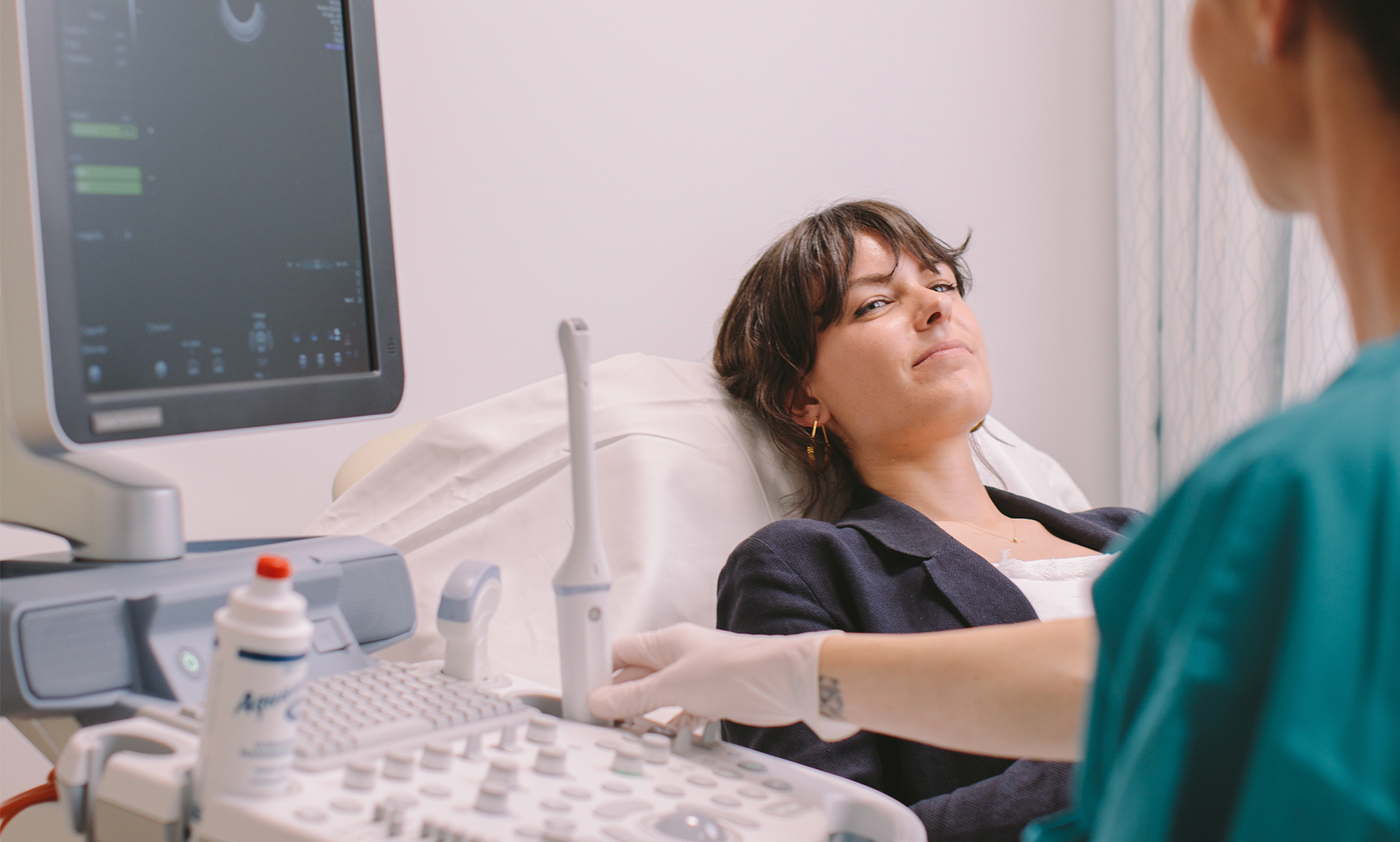
Pelvic ultrasound
A pelvic ultrasound assesses the female reproductive system - including the vagina, cervix, uterus, fallopian tubes, ovaries and other pelvic structures. It can provide helpful information for those experiencing:
- heavy, irregular or infrequent periods in pre-menopausal women
- pelvic pain
- post-menopausal bleeding
- infertility
- follicle tracking
Types of cycle tracking
With follicle tracking, our skilled sonologists track follicles containing eggs within your ovaries to see how they’re developing. They use a combination of transvaginal ultrasound and blood levels to measure the female hormones oestrogen and progesterone.
Your specialist may elect to track follicles during your natural monthly cycle to see how they’re developing. Once a leading or ‘dominant’ follicle forms in your ovaries, then you know it’s the best time to have sex in order to get pregnant. Alternatively, your specialist may prescribe medication to help promote the release of the mature egg.
With most IVF treatments, your specialist will artificially stimulate your ovaries with follicle stimulating hormone (FSH) in order to produce multiple mature follicles. After a dose of luteinising hormone (LH), your follicles will be collected in a simple day procedure known as an egg collection.
With IVF, we track follicular development more closely - meaning you’ll need two-four ultrasound scans, as well as regular blood tests to track hormone levels. The timing of your egg collection is based on your ultrasound and blood results.
Rest assured - your IVF nurse or fertility specialist will keep you well informed throughout the process.

Pregnancy scans
We perform an ultrasound at this stage of pregnancy to confirm your due date, the number of embryos and to visualise the embryo’s heart beating. Prior to seven weeks, it’s usually too early to acquire this information.
The 11-14 week scan provides important information about a pregnancy. Your specialist can talk you through this in more detail.
A screening test shows if your baby is at an increased risk for Down syndrome and other chromosome abnormalities. Unfortunately, the screening test doesn’t provide a definitive answer—but it can tell us which babies have an increased risk of having Down syndrome. The results may help you decide whether or not to have further diagnostic testing during your pregnancy.
Screening tests are simple and non-invasive, but they do have out-of-pocket expenses for the ultrasound and blood test.
The 20-week scan is an important one. It provides crucial information about fetal anatomy, the position of the placenta, amniotic fluid volume, pelvic anatomy and cervix health.
Some patients may require a third-trimester ultrasound to check fetal growth and assess the position of their placenta. It’s also a useful way to review findings from prior ultrasounds.
Chorionic villous sampling is a procedure that collects a small sample of placental tissue. As the cells of the placenta have the same genetic material as the fetus, this tissue can be tested for genetic abnormalities such as Down syndrome.
Amniocentesis is a procedure in which a fine needle is passed through the maternal abdomen and uterine wall into the amniotic fluid around the fetus. This allows us to obtain a sample of the amniotic fluid. Because cells within the amniotic fluid have the same genetic material as the fetus, they can be tested for genetic abnormalities such as Down syndrome.
Fertility Ultrasound FAQs
A pelvic ultrasound is a safe and non-invasive scan that assesses the female reproductive system, including the uterus, ovaries, cervix, fallopian tubes and surrounding pelvic structures.
It may be recommended if you are experiencing:
- Heavy, irregular or infrequent periods
- Pelvic pain
- Post-menopausal bleeding
- Infertility concerns
- The need for follicle tracking during fertility treatment
Follicle tracking is used to monitor the growth of ovarian follicles, which contain eggs. Our sonologists use transvaginal ultrasound alongside blood tests to measure hormone levels such as oestrogen and progesterone.
This information helps your fertility specialist determine the best time for conception, whether through natural cycles, timed intercourse, or IVF treatment.
During IVF, ultrasound plays a crucial role in monitoring follicle development. Typically, you will need two to four scans, along with regular blood tests, to track hormone levels.
The results guide your specialist in timing the egg collection procedure, ensuring the best chance of retrieving mature eggs. Throughout the process, your IVF nurse or fertility specialist will keep you fully informed and supported.
Different ultrasounds are performed at key stages of pregnancy:
- 7-week scan: Confirms due date, number of embryos and heartbeat.
- First-trimester scan (11–14 weeks): Provides important information about early pregnancy development.
- Mid-trimester scan (20 weeks): Assesses fetal anatomy, placenta position, amniotic fluid and cervix health.
- Third-trimester scan: Monitors fetal growth and placenta position, and reviews earlier findings if needed
This test combines an ultrasound with a blood test to estimate the likelihood of your baby having Down syndrome or other chromosomal conditions. It does not provide a definitive diagnosis but can help identify pregnancies at higher risk.
If results suggest an increased risk, your specialist may discuss further diagnostic options such as chorionic villous sampling or amniocentesis.
Both are diagnostic procedures that test for genetic conditions:
- Chorionic villous sampling (CVS): A small sample of placental tissue is collected and tested.
- Amniocentesis: A fine needle is used to collect amniotic fluid, which contains fetal cells for genetic testing.
These procedures are only recommended in specific circumstances and will be carefully explained by your specialist if they are appropriate for you.
A transvaginal ultrasound uses a small probe inserted into the vagina to provide a clearer, more detailed view of the uterus, ovaries and pelvic structures. It is often used in early pregnancy, fertility treatment, and when investigating gynaecological symptoms.
While some people may feel nervous about the procedure, it is safe, well‑tolerated, and performed with sensitivity to ensure your comfort and privacy.

Start your fertility journey
Wherever you are on your journey, one of our supportive nurse enquiry team members can help you understand your options and take the next step. These conversations are free and informative.