AMH Blood Test
AMH is useful as an indirect estimate of how many eggs might be retrievable during an IVF or egg-freezing cycle — but it is not a direct count of eggs. The AMH test does not tell you anything about the quality of those eggs; that is largely determined by your age.

Why Would I Need an AMH Blood Test?
When it comes to fertility, the more knowledge you have, the easier it is to consider your options. Anti-mullerian hormone (AMH) is a key marker in reproductive health, providing insight into a woman's fertility potential and egg supply. AMH plays a role in the development of female reproductive organs and is produced by ovarian follicles in a woman's ovaries.
Mostly, the reason women do this test is to plan and take charge of their fertility. Having an AMH blood test helps you understand your current status regarding your ovarian reserve. As we know, not only do you have fewer eggs as you age, but the quality of the eggs also lessens over time. The value of knowing where you stand can help you decide to try to conceive as soon as possible, or, if a family is desired in the future, you may think it’s better to freeze your eggs.
Measuring anti müllerian hormone levels
To measure AMH levels, a blood sample is taken. AMH is produced by granulosa cells in ovarian follicles within a woman's ovaries. AMH levels reflect the number of ovarian follicles and the health of the female reproductive organs. High or normal levels of AMH may mean you have lots of eggs and will therefore respond better to IVF treatment, whereas low levels mean that you have fewer eggs available and may not respond as well to treatment.
With an overall picture, you can set realistic expectations when retrieving eggs and understand how you’ll respond to certain medicines for IVF and egg freezing. So, put simply, knowing where you are fertility-wise will help you make the best decisions for your future.
What is the ovarian reserve?
Your ovarian reserve is the number of eggs left in your ovaries. AMH levels can help estimate how many eggs remain in the ovaries.
Incredibly, women are born with around 1 million eggs - but your egg supply declines naturally with age and through ovulation (when you release an egg as part of your menstrual cycle).
The rate at which your egg supply declines varies, though - every woman is different. Around 10% of women will experience an accelerated loss, where their egg supply declines faster than normal [1].
If you’re thinking of trying for a baby, the AMH is a good place to start.
AMH is produced by granulosa cells in the developing early antral follicles of a woman’s ovaries. As your eggs decline, so do the number of antral follicles - and with them your level of AMH.
10 Factors That Can Influence Your AMH Levels
What Do I Do Once I Get My Results Back?
When you have your results, which should be about a week after testing, the results will be discussed with you. You’ll receive all the relevant advice and you can then consider and plan the next steps.
Knowing your numbers will empower you to make the best decisions when family planning. If your AMH levels or egg count is low you may look at options including egg freezing, ICI (intracervical insemination), or IVF. If due to a low egg count, it may be very difficult to achieve a pregnancy on your own, it doesn't mean it’s not possible. But, if you’ve been already trying to conceive for over 12 months then you may like to start looking into testing for fertility issues.
No matter what your results indicate, it’s good to remember that your fertility and potential to conceive are influenced by many different factors. The AMH test is just one of the first steps. With the results, we can help you create a plan that’s individual to your lifestyle, needs, and desires.
Common questions
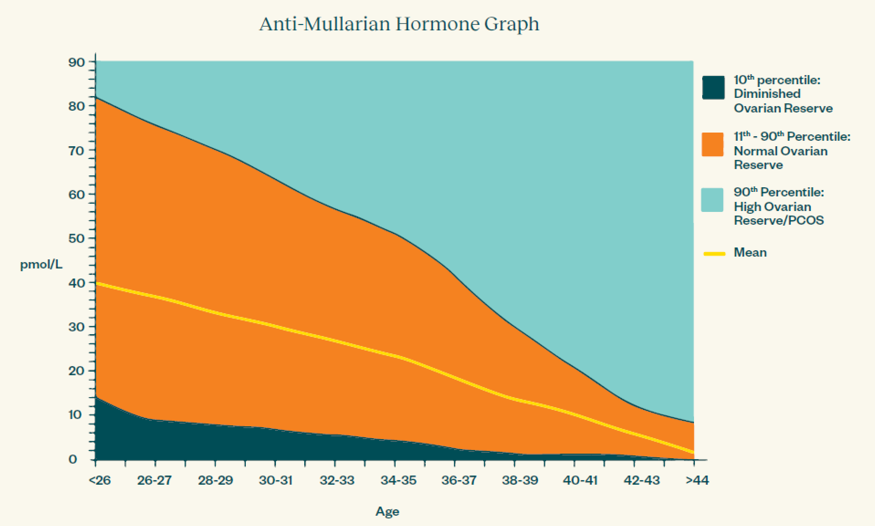
Average AMH levels by age
References
1. Anderson RA, Anckaert E, Bosch E, Dewailly D, Dunlop CE, Fehr D, Nardo L, Smitz J, Tremellen K, Denk B, Geistanger A, Hund M. Prospective study into the value of the automated Elecsys antimüllerian hormone assay for the assessment of the ovarian growing follicle pool. Fertil Steril. 2015 Apr;103(4):1074-1080
2. K Tremellen and D, Zander-Fox. Serum anti-Mullerian hormone assessment of ovarian reserve and polycystic ovary syndrome status over the reproductive lifespan. Aust N Z J Obstet Gynaecol, 2015; 55, pp 1-6
Planning on having kids one day? Then it’s worth considering the AMH test. If you're keen to know about your fertility and ovarian reserve, we suggest talking to your fertility specialist.
Content reviewed for clinical accuracy by Professor Luk Rombauts
- Adjunct Clinical Professor, Monash University
- Group Medical Director, Monash IVF
- Director, Grevillea Foundation
- Past-President, Fertility Society Australia and New Zealand
- Past-President, World Endometriosis Society

Start your fertility journey
Wherever you are on your journey, one of our supportive nurse enquiry team members can help you understand your options and take the next step. These conversations are free and informative.