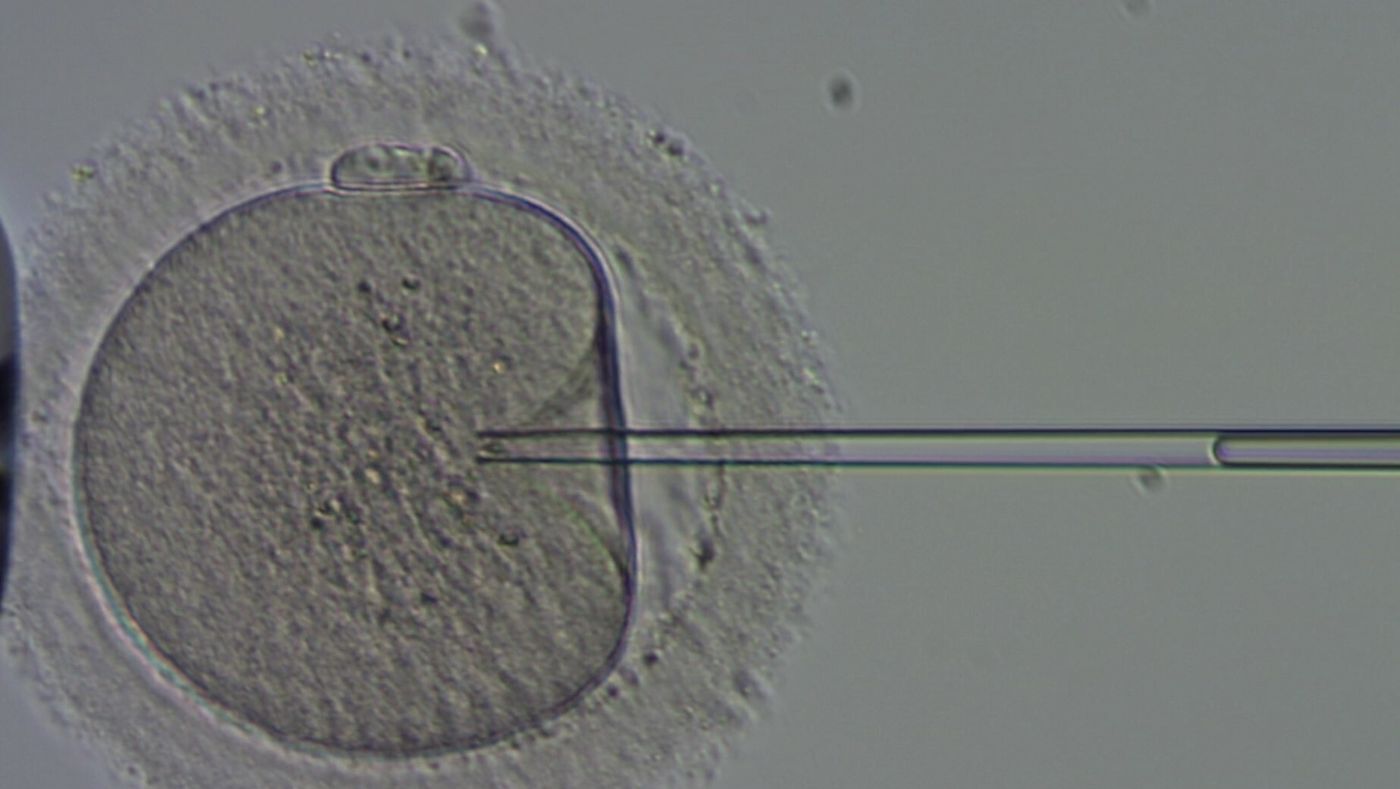
Known as PIEZO-ICSI, the technique was introduced to Australia by Monash IVF through clinical trials starting in 2019. It is now offered across Monash IVF's main clinics.
Monash IVF Geelong Clinical Director Dr Prue Johnstone says that unlike traditional ICSI, PIEZO-ICSI is thought to be less damaging to a fragile egg as there is less pressure needed to puncture the egg cell wall and less disruption to the egg cell contents.
Since its introduction in Australia, hundreds of babies have been born following treatment using PIEZO-ICSI.
What is PIEZO-ICSI?
PIEZO-ICSI uses a blunt-tipped pipette and rapid vibrations to inject a single sperm into an egg. It is also known as "soft touch ICSI" or "gentle ICSI".
ICSI stands for intracytoplasmic sperm injection, a laboratory technique used to assist fertilisation during IVF treatment.
How does PIEZO-ICSI differ from conventional ICSI?
PIEZO-ICSI works by gently penetrating an egg using high-speed vibration, rather than the standard cutting action used in conventional ICSI.
The aim is to reduce damage to the egg during injection.
“Reducing egg damage is important as the hope is to optimise the number of eggs that survive the ICSI process,” Dr Johnstone said.
“This improves the number of embryos available for transfer or freezing.”
What is the difference between ICSI and standard IVF?
Standard IVF and ICSI are two ways of fertilising eggs during IVF treatment.
In standard IVF, eggs and sperm are placed together in a laboratory dish. With ICSI, an embryologist selects a single sperm and injects it directly into an egg to assist fertilisation.
Standard IVF may be recommended when there are no significant sperm-related fertility problems or previous fertilisation difficulties. ICSI may be recommended when sperm numbers or movement are low, or when fertilisation has been poor in a previous IVF cycle.
PIEZO-ICSI is a variation of the injection technique used in conventional ICSI.
Does PIEZO-ICSI work?
An Australian study involving 108 patients found PIEZO-ICSI resulted in around a 50 per cent reduction in egg damage and a fertilisation rate of 71.6 per cent, compared with 65.6 per cent for conventional ICSI. However, clinical pregnancy and live birth rates per embryo transfer were similar.
The study found that PIEZO-ICSI resulted in a higher fertilisation rate and significantly less egg damage and could reduce the number of rounds of IVF a woman needs to conceive.
Who should consider PIEZO-ICSI for IVF?
PIEZO-ICSI may be considered for patients who have experienced poor fertilisation, a high proportion of damaged eggs following conventional ICSI or poor embryo development.
It may also be considered for women with fragile eggs, including some older patients.
“Ultimately, the decision to use PIEZO-ICSI should include a fertility specialist and embryology team, so the right treatment is recommended,” Dr Johnstone said.
A Monash IVF fertility specialist can review previous treatment results and discuss whether PIEZO-ICSI may be suitable.
Find a Monash IVF specialist
This article includes quotes from Monash IVF Geelong Clinical Director Dr Prue Johnstone.
Dr Prue Johnstone is a Gynaecologist and Fertility Specialist with more than 15 years' experience in the field of reproductive medicine.
Dr Johnstone is passionate about all aspects of fertility and IVF. She has a special interest in management of female and male infertility, social infertility, PMOS and recurrent miscarriage, as well as diagnostic and operative hysteroscopy and laparoscopy.
Learn more about Dr Prue Johnstone